 To main content
To navigation
To main content
To navigation


A better understanding of the structure of steroid hormones
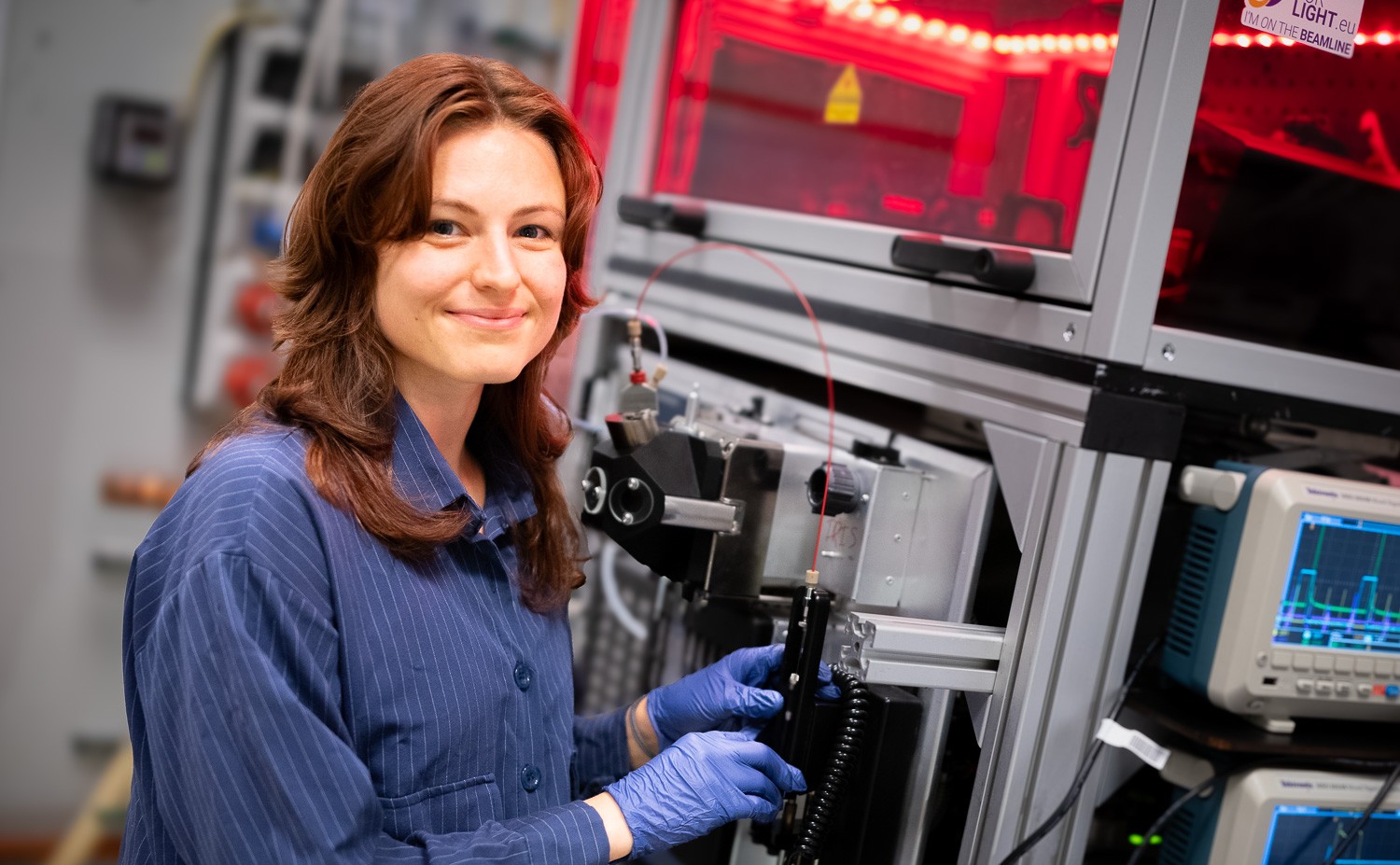
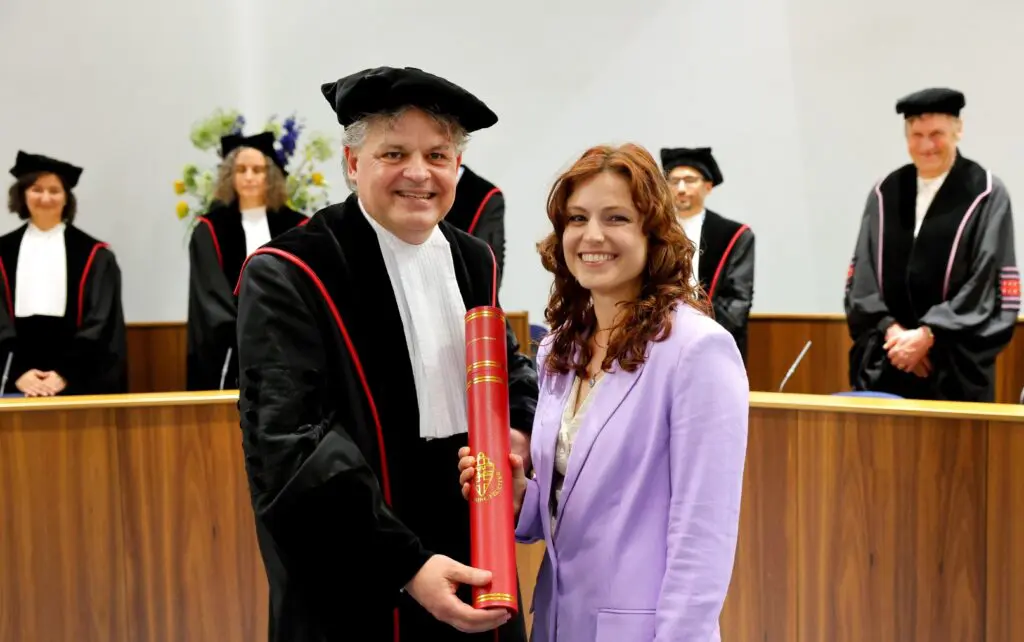
Laura Finazzi recently successfully defended her PhD thesis titled ‘Applications of infrared ion spectroscopy in physical, bio-organic and astro-chemistry’. She started her PhD at HFML-FELIX with studying molecules whose structures in organic chemistry have been a matter of debate.
Some of the molecules she looked at can be found in space, others are more common in our body. Out of all the molecules that can be found in the body, she was most interested in steroidal hormones. This is not an easy class of molecules to study when you use mass spectrometry as a research technique, like Finazzi has. They tend to easily break down, react with other molecules and rearrange. But there are ways to do it. For instance by using Infrared ion spectroscopy.
‘Infrared ion spectroscopy combines the advantages of mass spectrometry and infrared spectroscopy’, Finazzi explains. ‘Mass spectrometry is sort of the equivalent of a chemical scale. So it gives you the mass, or the weight of a species of molecule and its different parts. You can see it as a few pieces of Lego together in a structure. Mass spectrometry gives you the weight of the total structure and the pieces, very precise. But the thing that mass spectrometry doesn’t do, is show you how these pieces fit together to form the whole. And that is knowledge you need, if you want to work out how to recognize or work with a molecule. So that is where infrared spectroscopy comes in. With this technique you use a laser to excite the molecules, making them vibrate. Different wavelengths of the laser light set in motion different vibrations. And looking at all these vibrations gives you information about what is connected to what, and how. Eventually you will end up with a spectrum, a ‘fingerprint’ of the molecular structure.’
Studying steroid hormones
You can use this technique on a wide variety of molecules. Some might be relevant for new treatments in medical care, others could tell us more about air pollution, or the atmosphere of a planet in outer space. Finazzi’s most recent research focussed on molecules that play a very important role in our body. Well, a whole bunch of different vital roles, to be more precise. ‘So the latest, and actually my favourite project was studying steroid hormones. They play a part in your immune system, in reproduction, our metabolism and a lot more. We have known about them for a long time, and they have been studied with mass spectrometry before by looking at the fragments produced when the molecule breaks. However, there are a lot of unanswered questions about these fragments, for instance how they are produced.’
Like she explained before: mass spectrometry does not give you the structure of the molecule. But those are details that you really need to have, especially if you want to study biological processes in the body and how in diseases they might be altered. Or when you want to develop more personalised medicine, for instance. ‘There are many different types of steroid hormones, but they are very similar to each other, because they possess the same core structure. They just have slight modifications around their central core. Even these very small differences have a large effect on how these molecules behave and break, so they are important to map. With infrared spectroscopy you can get the information you need to figure out what their exact structure is and how that structure formed. It is a bit like solving a puzzle, and that is something that I really like about this research.’
Detecting anomalities
Finazzi and her colleagues now have a better idea of the structure of steroid hormones. ‘There is still a lot of work to do, but I am very happy with our results. Hopefully it is something other researchers can build on. One of the things it could be useful for, other then medical research, is illegal doping. People are constantly working on ways to evade doping tests. Sometimes it only takes a slight modification to a molecule for it to not get detected. So knowing as much as possible about how a molecule should behave, or break once it is studied with mass spectrometry, even when it is slightly altered, gives you a better shot at detecting it. The same goes for how other steroid hormones break down in the body. When this process does not work the way it is supposed to, this can lead to a disease. And again, the same for fertility: knowing as much as you can about the structure of these hormones and how they work, will help push forward research in this field. And since there are still a lot of questions that need answering, it will remain a very important and interesting subject to study.’
Being honest about the work market at the moment, Finazzi adds: ‘I would love to do more research on this subject myself, but that all depends on my next research position. And at the moment I am still looking for one.’ So, if you read this and you know of a position freeing up, don’t hesitate to get in touch.
Other news
Unravelling the mystery of high-temperature superconductivity

Apply for research time before 15 November

Visit the lab during the Weekend of science!

Two HFML-FELIX projects receive funding for modernizing research infrastructure
Sandra Brünken receives Special Review Lecturer Award
Finally, we know more about the elusive magnetic properties of small groups of atoms
Four new projects receive funding out of the HFML-FELIX Incentive Fund

Apply for research time before 15 May

Holland High Tech funding for detection and identification of chemical unknowns

Why researchers want to levitate living cells in high magnetic fields
‘When I finish an experiment, it is often not the end of something, but the beginning.’

HFML-FELIX at NWO Physics 2026: Exploring Matter Under Extreme Conditions

When electrons sing in harmony

Happy holidays from all of us!
HFML-FELIX researcher Olga Duda wins NWO Poster Award second year in a row

How a sunscreen molecule that encounters metal ions can absorb light in a very different way

Promising new technologies for researching inherited metabolic diseases

First four projects to receive funding out of the new Incentive Fund
Chemists find clues to the origins of iconic ‘football molecule’ in space

Apply for research time before 15 November