 To main content
To navigation


Unravelling the mystery of high-temperature superconductivity
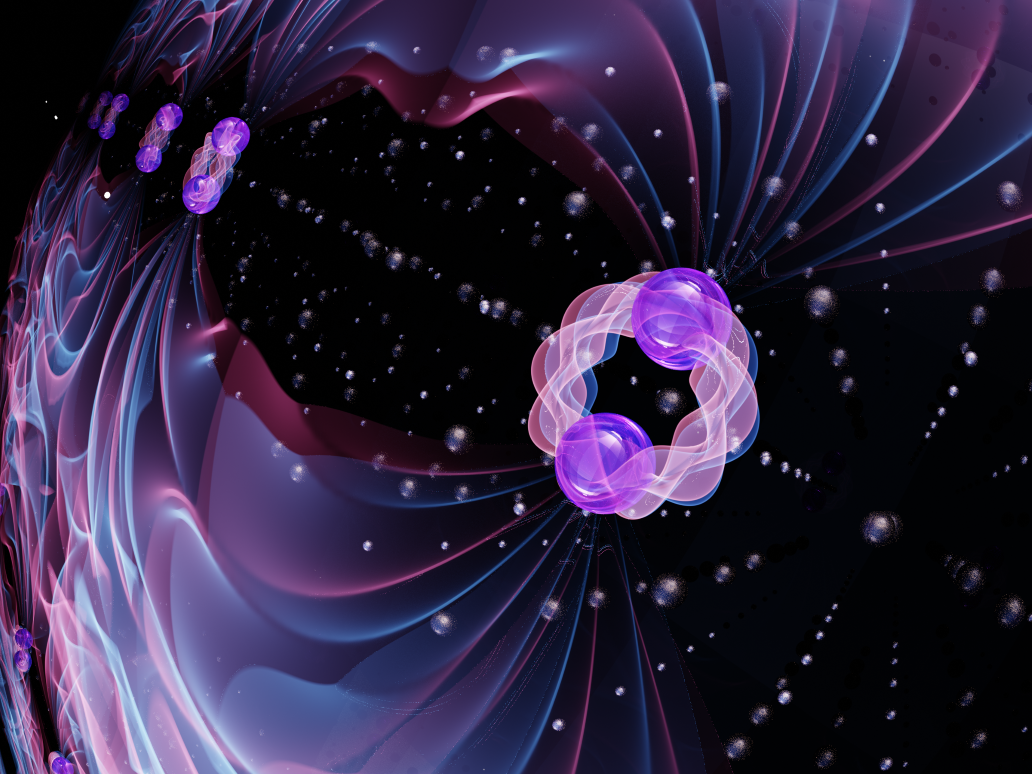
An international team of researchers from HFML-FELIX, the UK, China and the US have made an important breakthrough in the field of high-temperature superconductivity by identifying the mechanism by which electrons combine to transmit power with no loss of energy. The origins of high-temperature superconductivity have remained hidden for over 40 years and while this study has identified its origin in only one family, it brings resolution of the mystery in all families of high-temperature superconductors one major step closer. The article describing this breakthrough has appeared online in Nature Physics.
Superconductivity – a state of infinite electrical conduction – is a remarkable, almost magical, phenomenon whose impact stretches from the sense of wonder it imparts on inquisitive young minds to the myriad of applications that its unique properties bestow on society. Discovered in 1911 by Dutch scientist Kamerlingh Onnes (for which he was awarded the Nobel Prize in Physics in 1913), it took another 4-5 decades before the first complete quantum theory of superconductivity was conceived by John Bardeen, Leon Cooper and Robert Schrieffer. Their resultant theory (so-called BCS theory after the initials of its three proponents), describes in microscopic detail how the negatively-charged electrons interact with vibrating (positively-charged) ions within the host to flow freely from one side of the crystal to the other.
The better the metal, the worse the superconductor
Curiously, this same interaction is also what creates resistance in a metal. Upon cooling, the lattice vibrations soften and the resistance of the metal duly decreases. At absolute zero (-273 degrees Celsius), all vibrations stop, yet resistance does not vanish there since electrons continue to bounce off any defects present in the lattice. Remarkably, in a superconductor, resistance vanishes at finite temperatures even though the ions themselves are still vibrating. The electrons do this by forming pairs, known as Cooper pairs (a state conceived by Leon Cooper); the energy lost from the first electron – as it passes the lattice and momentarily deforms – is returned to a second electron drawn to this deformation as the lattice relaxes back into its starting position.
The BCS theory proved to be a remarkably successful theory (winning its authors the Nobel Prize in Physics in 1972). It showed, paradoxically, that the better the metal, the worse the superconductor. This is because the critical temperature (Tc) below which the resistance vanishes is set by how strongly the electrons ‘feel’ the lattice vibrations, which in turn determines how resistive they are above Tc. There was, however, a limit to how strong this inter-action could be in a metal and BCS theory set a limit on the maximum Tc that could be attained – about 30 degrees above absolute zero – meaning expensive cryogenic fluids were required to access this unique state of matter. Nevertheless, superconducting technology drove medical innovations such as MRI scanners, major energy infrastructure projects like the ITER fusion reactor and even the development of the Large Hadron Collider at CERN.
Through the threshold
The theoretically-imposed ceiling in Tc was finally surpassed in 1986 with the discovery of superconductivity in lanthanum barium copper oxide by Georg Bednorz and Alex Müller working at IBM, Switzerland. Within a year of their discovery, Tc in these copper oxides or ‘cuprates’ had climbed to 3 times the historical threshold, and with it, the effective cooling costs to access superconductivity had come down ten-fold. No physicist had imagined that Tc could ever reach such giddy heights, let alone in a ceramic a novice could cook up themselves in a dirty muffle furnace. The Nobel panel were similarly giddy, bestowing on Bednorz and Müller the 1987 Nobel Prize in Physics, less than 18 months after their initial finding, making theirs the quickest award in Nobel history.
Given such extraordinarily high Tc values, it soon became clear that the lattice vibration model of Bardeen, Cooper and Schrieffer was incapable of explaining high-temperature superconductivity and so the search began for a new mechanism, likely involving entities that oscillate at higher frequencies than the ions themselves.
On to electrons
Electrons became the prime candidate for this new mechanism as they possess both a spin (like a spinning top, that produces a tiny magnetic field) and a charge (that produces a current) that can fluctuate in space and time. Over time, spin and charge fluctuations have been mapped out in exquisite detail, using international spectroscopic facilities. What was missing until now, however, was evidence linking the strength of interaction between the mobile electrons and either of these fluctuations and the value of Tc. Just as in conventional superconductors, this information is encoded in the resistance of the material, and the key to identifying the relevant interaction is to decode this information from the resistance itself.
This is what the team led by Prof. Nigel Hussey at HFML-FELIX and IMM has now provided. “It first required the synthesis of a special thin-film sample, produced by our Chinese collaborators led by Prof. Kui Jin, in which the copper oxide material, in this case, lanthanum cerium copper oxide, is deposited layer-by-atomic-layer onto a substrate to create a smooth gradient of Tc – from its maximum value to zero – along its entire length”, explains Hussey.
Using lithography, the team then patterned a series of electrical contacts along the film to enable the resistance to be measured as finely-spaced values of Tc while keeping the level of disorder across the film the same. As Dr. Caitlin Duffy, Prof. Hussey’s former PhD student, explains; “Together with Dr. Qihong Chen from the Chinese Academy of Sciences, I performed a series of experiments on these films at the high magnetic field facility HFML-FELIX to extract the change in resistance as a function of temperature, magnetic field strength and Tc. By employing some analytical tricks, we were then able to identify the dominant source of resistance in this material as scattering off the fluctuating spins, akin to fluctuating atomic-scale magnets. The correlation between the strength of this interaction and Tc then confirmed that the origin for superconductivity in this material is indeed the interaction between mobile electrons and spin fluctuations.”
Missing ingredient
But this is not the end of the story, however, as Prof. Hussey continues. “Comparing these results with our earlier high-magnetic-field studies, published in Nature in 2021, shows us that we cannot simply turn up the dial (the strength of this interaction) to obtain the really high Tc values found in some of these materials. What this study also shows us is that there is in fact a second missing ingredient that drives up the superconducting transition temperature. The task now is to go and find it. Only then can theorists develop the full story for high-temperature superconductivity. In my opinion, whoever succeeds in that quest will surely be a strong candidate for a future Nobel Prize in Physics.”
For the full paper in Nature Physics: Evidence for spin-fluctuation-mediated superconductivity in electron-doped cuprates
Research contact
Prof. dr. Nigel Hussey
More info about Nigel

Other news
Apply for research time before 15 November

Visit the lab during the Weekend of science!

A better understanding of the structure of steroid hormones
Two HFML-FELIX projects receive funding for modernizing research infrastructure
Sandra Brünken receives Special Review Lecturer Award
Finally, we know more about the elusive magnetic properties of small groups of atoms
Four new projects receive funding out of the HFML-FELIX Incentive Fund

Apply for research time before 15 May

Holland High Tech funding for detection and identification of chemical unknowns
Why researchers want to levitate living cells in high magnetic fields
‘When I finish an experiment, it is often not the end of something, but the beginning.’
HFML-FELIX at NWO Physics 2026: Exploring Matter Under Extreme Conditions
When electrons sing in harmony

Happy holidays from all of us!
HFML-FELIX researcher Olga Duda wins NWO Poster Award second year in a row
How a sunscreen molecule that encounters metal ions can absorb light in a very different way

Promising new technologies for researching inherited metabolic diseases

First four projects to receive funding out of the new Incentive Fund
Chemists find clues to the origins of iconic ‘football molecule’ in space
Apply for research time before 15 November