 To main content
To navigation
To main content
To navigation



Holland High Tech funding for detection and identification of chemical unknowns
A project run by a consortium consisting of HFML-FELIX and Synvenio B.V., is one of seven innovative ideas that received support in the latest Holland High Tech funding round. Holland High Tech stimulates innovation by awarding funds for research in the form of public-private partnership projects.
The project, run by HFML-FELIX researcher Jonathan Martens and titled ‘Accelerating Molecular Identification with Advanced Infrared Ion Spectroscopy’, will focus on the ultra-sensitive detection and identification of chemical unknowns.
This is critical for several sectors, including clinical diagnostics, pharmaceutical research, and environmental monitoring. Current state-of-the-art methodologies rely on often unavailable chemical standards, creating challenges, delays, and increased costs.
Advanced Analytical Platform
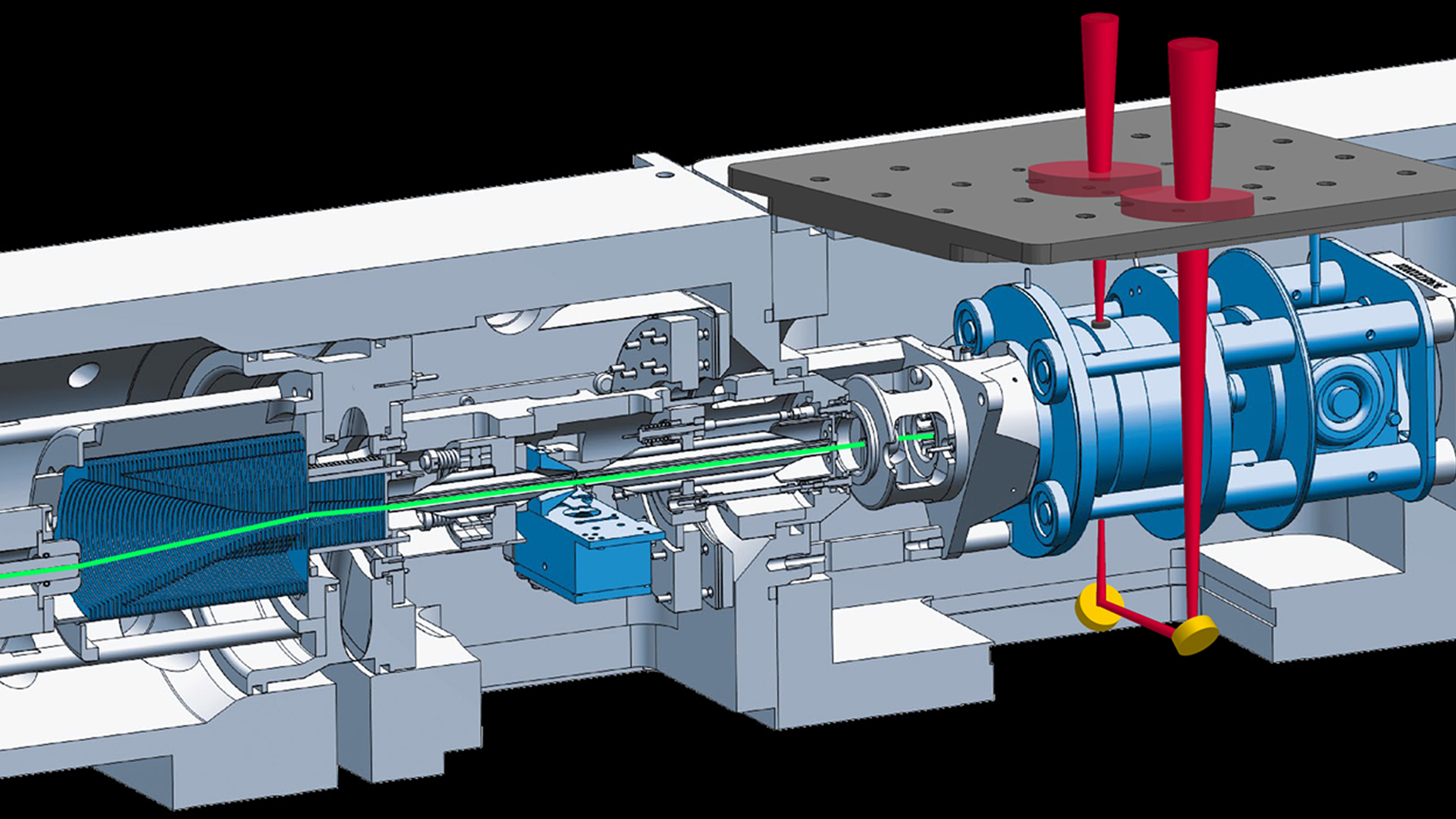
This project integrates a variety of techniques – IR-spectroscopy, liquid chromatography mass spectrometry and machine learning – to accelerate molecular identification, enhancing industrial and scientific analyses.
The aim of the collaborative project between HFML-FELIX and Synvenio B.V. is to develop a next-generation analytical platform, combining liquid chromatography-mass spectrometry (LC-MS) with Free Electron Laser-based infrared ion spectroscopy (FEL-IRIS). The FEL-IRIS method uniquely identifies unknown molecules without relying on chemical standards, overcoming major bottlenecks.
Synvenio B.V. will synthesize these newly identified compounds as standards, enabling identification in a much broader range of routine analytical laboratories. Enhanced hardware coupling and advanced machine learning algorithms will accelerate identification processes.
Impact and Applications
The project targets critical sectors like clinical diagnostics, pharmaceutical research, and environmental monitoring, significantly improving sensitivity, speed, and accuracy in molecular analysis. The developed platform will strengthen the Dutch analytical sciences, establish national and international research collaborations, and support sustainable research practices through optimized analytical efficiency. The technologies developed here will be deployed in an experimental user-station at the institute HFML-FELIX for broad industry and academic usage.
For more information: here you can find all funded projects.
Research contact
Dr. Jonathan Martens
More info about Jonathan

Other news
Visit the lab during the Weekend of science!

A better understanding of the structure of steroid hormones

Two HFML-FELIX projects receive funding for modernizing research infrastructure
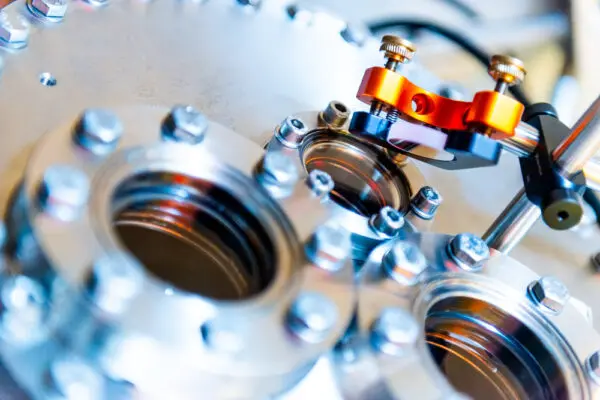
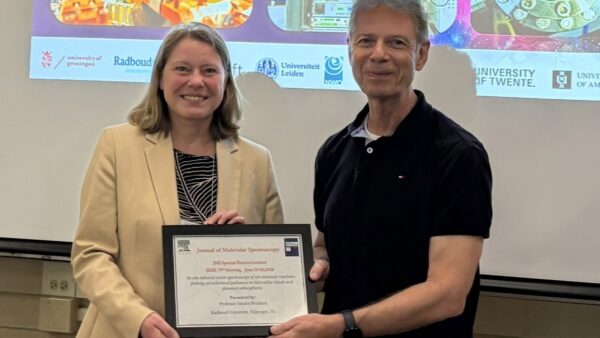
Sandra Brünken receives Special Review Lecturer Award
Finally, we know more about the elusive magnetic properties of small groups of atoms
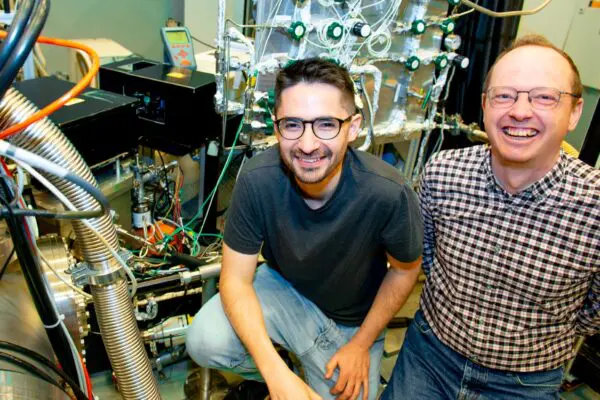
Four new projects receive funding out of the HFML-FELIX Incentive Fund

Apply for research time before 15 May

Why researchers want to levitate living cells in high magnetic fields
‘When I finish an experiment, it is often not the end of something, but the beginning.’

HFML-FELIX at NWO Physics 2026: Exploring Matter Under Extreme Conditions

When electrons sing in harmony

Happy holidays from all of us!
HFML-FELIX researcher Olga Duda wins NWO Poster Award second year in a row
How a sunscreen molecule that encounters metal ions can absorb light in a very different way

Promising new technologies for researching inherited metabolic diseases

First four projects to receive funding out of the new Incentive Fund
Chemists find clues to the origins of iconic ‘football molecule’ in space

Apply for research time before 15 November

Radboudumc joins HFML-FELIX as an official partner to advance metabolic disease research
Exciting research position in newly granted European project!