 To main content
To navigation
To main content
To navigation


Promising new technologies for researching inherited metabolic diseases
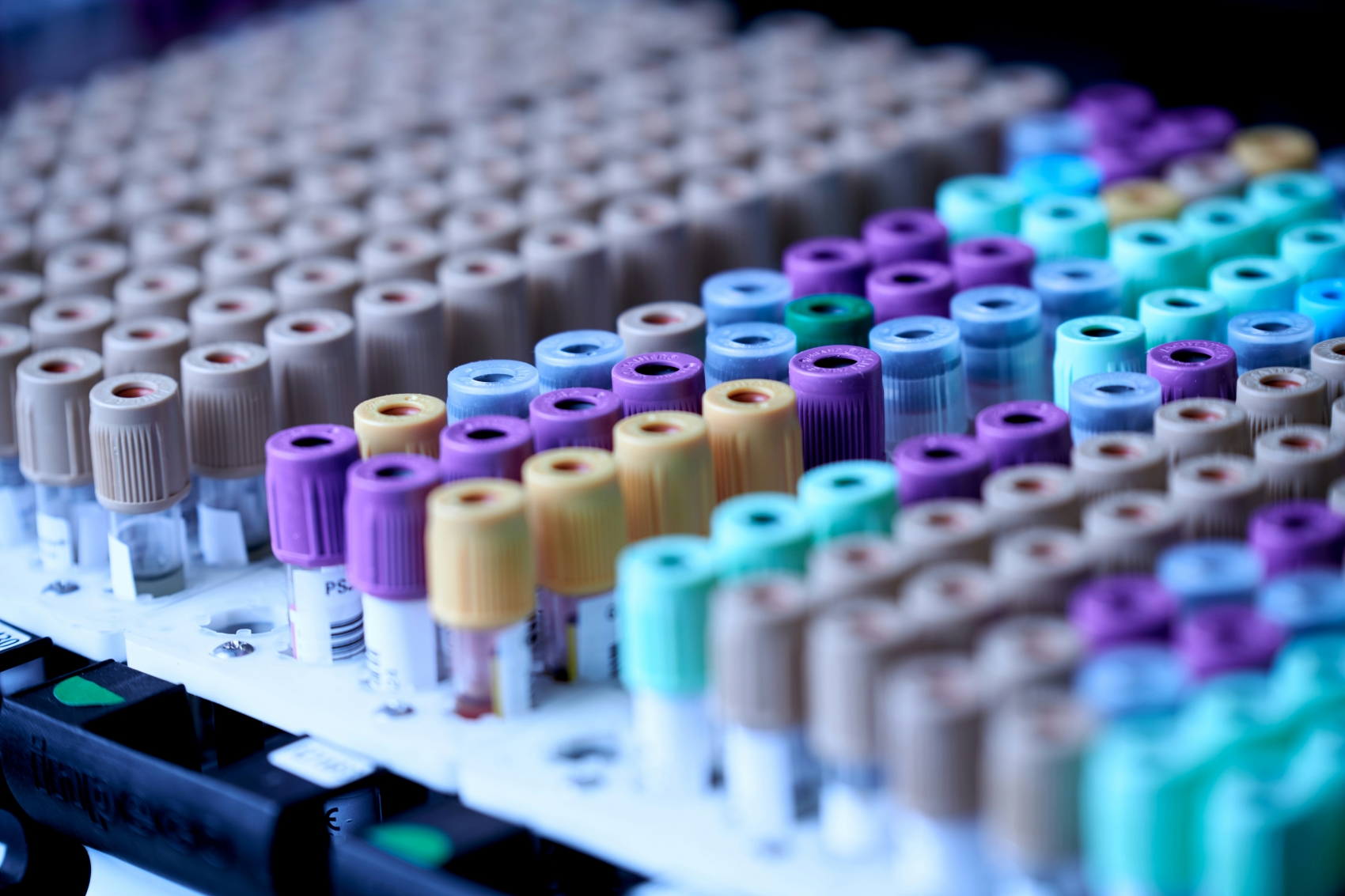
Researchers at HFML-FELIX and Radboudumc’s Translational Metabolic Laboratory have published an insightful new review paper in the Journal of Inherited Metabolic Disease. In this paper, they give an overview and outlook on emerging techniques that are important for characterizing inherited metabolic diseases (IMDs) – a large group of disorders typically caused by mutations in genes encoding enzymes. They demonstrate how state-of-the-art mass spectrometry-based metabolomics techniques are used in clinical applications and how techniques pioneered at HFML-FELIX using infrared ion spectroscopy can be applied to address persistent challenges in metabolite identification research.
Untargeted metabolomics
The researchers highlight untargeted metabolomics as a promising tool for IMDs, offering simultaneous detection and relative quantification of potentially thousands of metabolites in one go. While traditional targeted assays currently remain important for quantifying known biomarkers for screening and diagnostics, untargeted metabolomics provides a unique and unbiased assessment of much wider portions of the metabolome. This enables the discovery of novel biomarkers and deepens our understanding of disease mechanisms.
Future advances in untargeted metabolomics are expected to address existing challenges. In addition to using infrared ion spectroscopy for metabolite identification, other innovations in computational biology, bioinformatics, and the continued integration of multi-omics datasets using machine learning techniques will surely play pivotal roles in overcoming these challenges, the group of researchers conclude. Their joint paper showcases the value of translating fundamental science to patient care and provides an excellent insight into the primary subject of their collaboration.
Collaborators:
Dr. Udo Engelke
Prof. Ron Wevers
Prof. Dirk Lefeber
Dr. Purva Kulkarni
Link to paper:

Research contact
Dr. Jonathan Martens
More info about Jonathan

Other news
Why researchers want to levitate living cells in high magnetic fields
‘When I finish an experiment, it is often not the end of something, but the beginning.’

HFML-FELIX at NWO Physics 2026: Exploring Matter Under Extreme Conditions

When electrons sing in harmony

Happy holidays from all of us!
HFML-FELIX researcher Olga Duda wins NWO Poster Award second year in a row
How a sunscreen molecule that encounters metal ions can absorb light in a very different way

First four projects to receive funding out of the new Incentive Fund

Chemists find clues to the origins of iconic ‘football molecule’ in space

Apply for research time before 15 November

Radboudumc joins HFML-FELIX as an official partner to advance metabolic disease research
Exciting research position in newly granted European project!

Unraveling the secrets of space ice
Fingerprints of important interstellar molecules determined

Registration open for the ‘Astrochemistry: From Quantum to Cosmos’-meeting
A new, creative approach to switching magnetization
HFML-FELIX researchers win prize for molecules that stimulate crop growth
A successful 2025 HFML-FELIX User Meeting
Shedding light on a promising organic catalyst
Kim Steenbakkers awarded cum laude distinction at PhD defense