 To main content
To navigation
To main content
To navigation


With our research facilities, we aim to carry out as many experiments as possible. By doing this, HFML-FELIX uses a lot of electricity, mainly for research in high magnetic fields. This is due to the large amount of current flowing through the magnets: at maximum magnetic field, we briefly use as much power as 70,000 households use on average. Over the course of a full year, our electricity consumption for the magnets, free-electron lasers, and cooling installation is roughly equivalent to that of 3,000 households (2025). Because of this high electricity consumption, we are constantly looking for ways to make our facilities more sustainable, focusing on three areas.
- How can we reduce electricity consumption while conducting research?
The magnets at HFML-FELIX are designed and built to generate the highest possible field while withstanding all the enormous forces this entails. As a result, energy consumption is largely fixed by the design and cannot easily be adjusted. While carrying out experiments, researchers try to use the magnets as efficiently as possible and avoid keeping them switched on longer than necessary. The same applies to other high-consumption equipment, such as pumps.
HFML-FELIX has been working on developing magnets in combination with superconductors for years. Superconductors have no electrical resistance and can therefore generate magnetic fields much more efficiently. By combining superconductors with our current magnets, we can generate a stronger magnetic field using the same amount of current.
- How can we reduce electricity-related emissions by using the magnets at greener times of day?
HFML-FELIX purchases green electricity and therefore, in principle, has no CO2 emissions from its electricity use. At the same time, we know that the Dutch electricity grid is also fed by gas- and coal-fired power plants. CO2 emissions per kWh in the Netherlands vary considerably throughout the year and within a single day. This is partly because the production of green electricity is not constant: solar energy, for example, is only generated during the day and mainly in spring and summer. Electricity consumption also fluctuates significantly: heat pumps drive up the demand in winter, and induction cooktops are mainly used around mealtimes. In general, the grid tends to be greenest during the day in the summer months, and least green during the morning and evening peak hours in winter.
HFML-FELIX has adjusted the times at which magnet research is carried out in order to run experiments during greener periods of the day. For the months of March through October, we expect this to result in about 10 percent lower electricity-related emissions, while still being able to carry out the same amount of research. Major maintenance work is now also scheduled less often in summer, so that research can benefit from the green electricity available during that period.
- How can we make use of all the heat we produce?
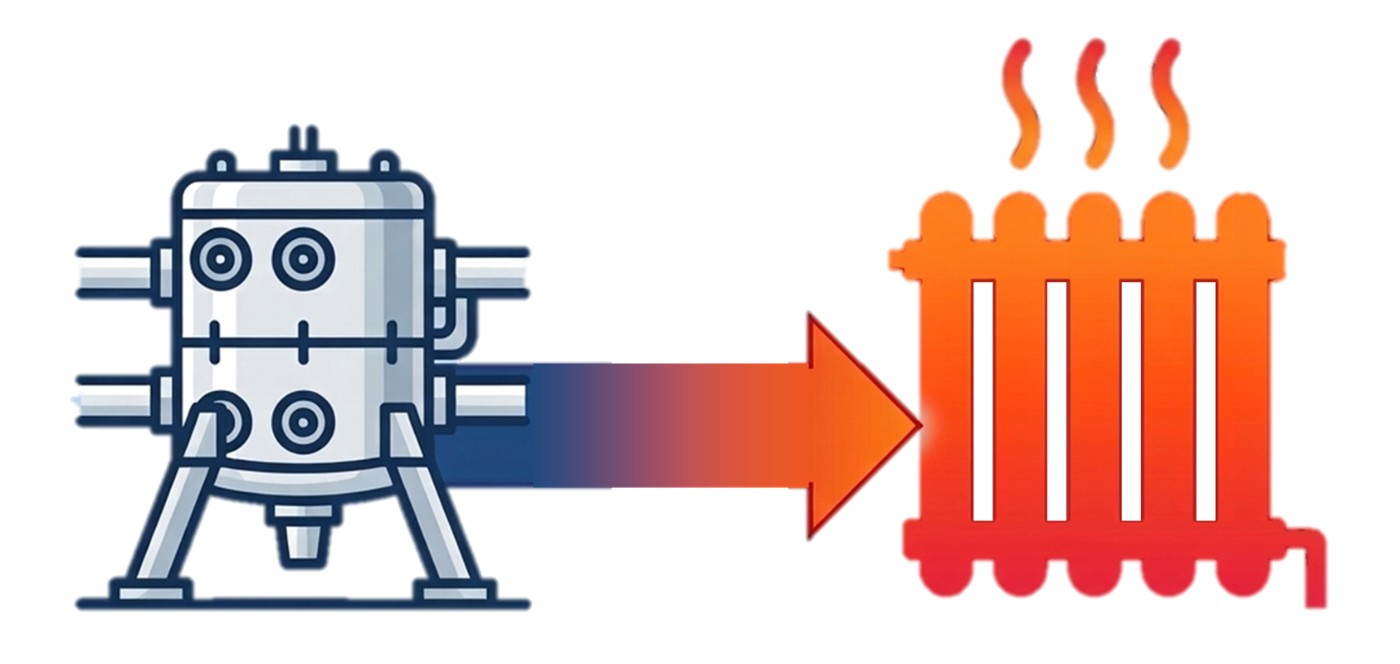
All the electricity we use is converted into heat. We aim to recycle as much of that heat as possible, by supplying it to the Radboud University campus. In winter time, the buildings on the campus are thus partially warmed by magnet waste heat! In doing so, we help make the campus more sustainable while also achieving efficient cooling for our own systems.
If you have any questions regarding our sustainability efforts, please contact Femke Bangma, sustainability officer at HFML-FELIX.